
 01
01Complete history
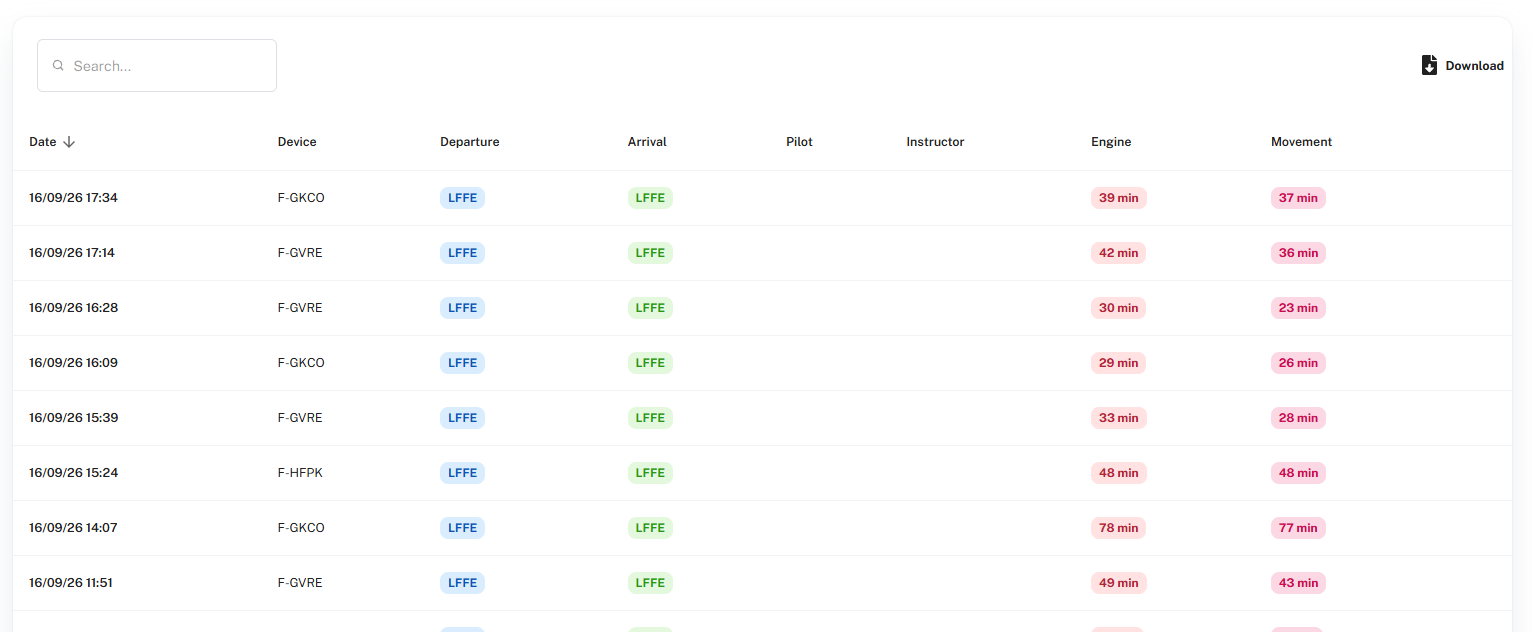
Review your flight list, aircraft used, visited airfields, and engine and movement times.
Pilots
Keep your history and analyse routes, altitude, flight phases and landings from one account.
How can you enjoy Click & Take off? Discover the solution that suits you.
Get started01Review your flight list, aircraft used, visited airfields, and engine and movement times.
 02
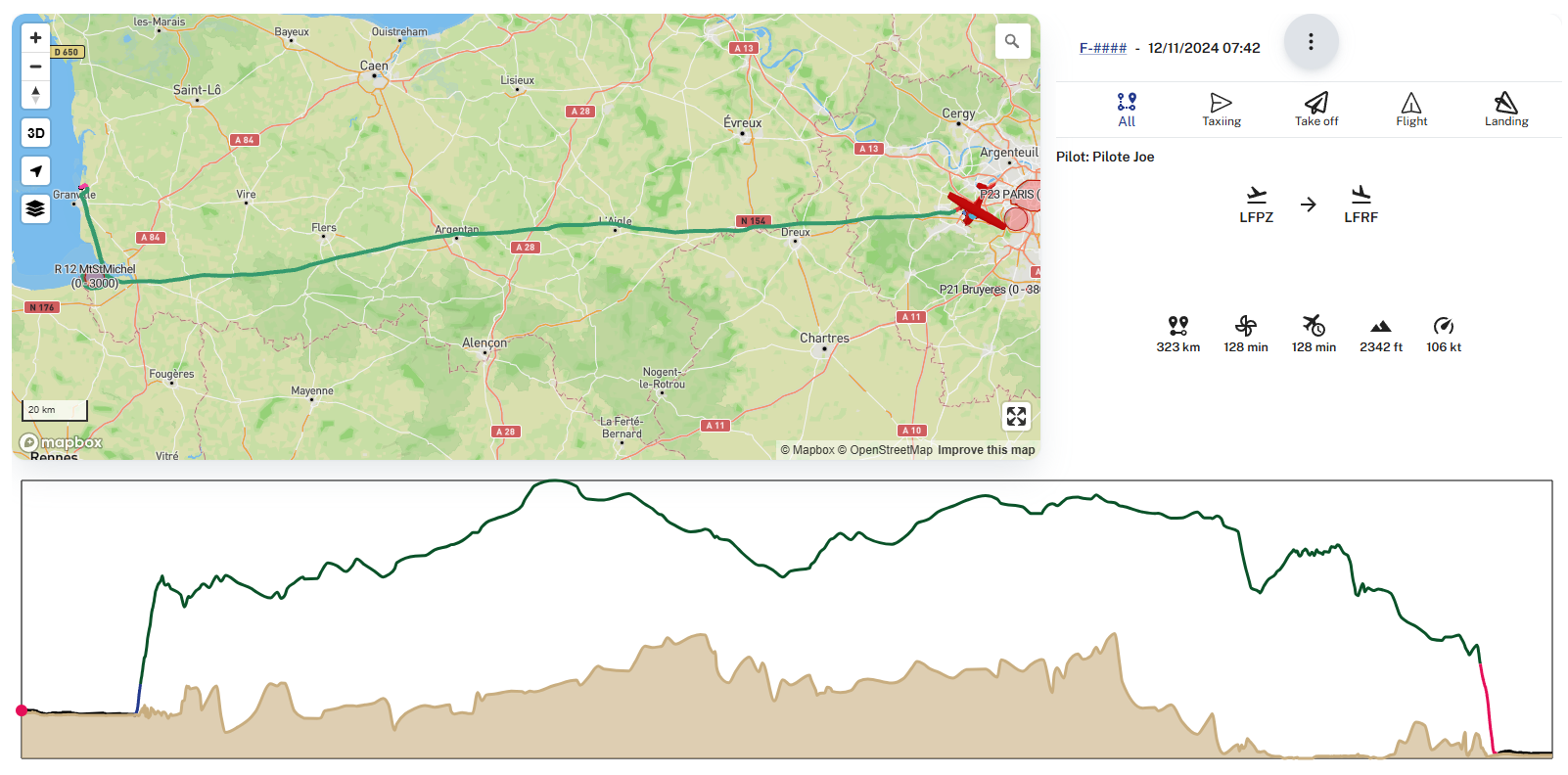
02Taxi, take-off, flight and landing are presented separately.
 03
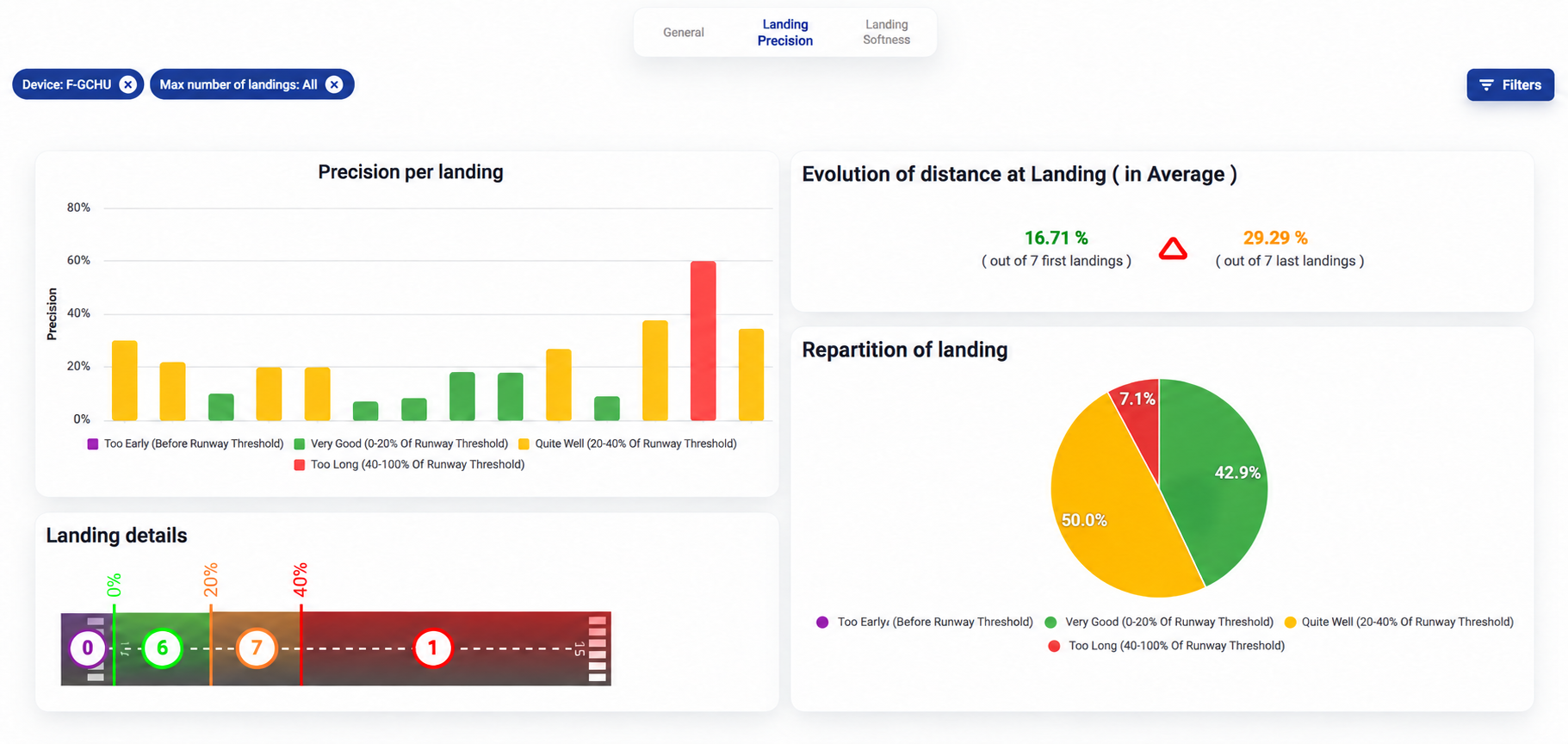
03Compare flights and track changes in average landing G and touchdown position along the runway.
Your personal dashboard
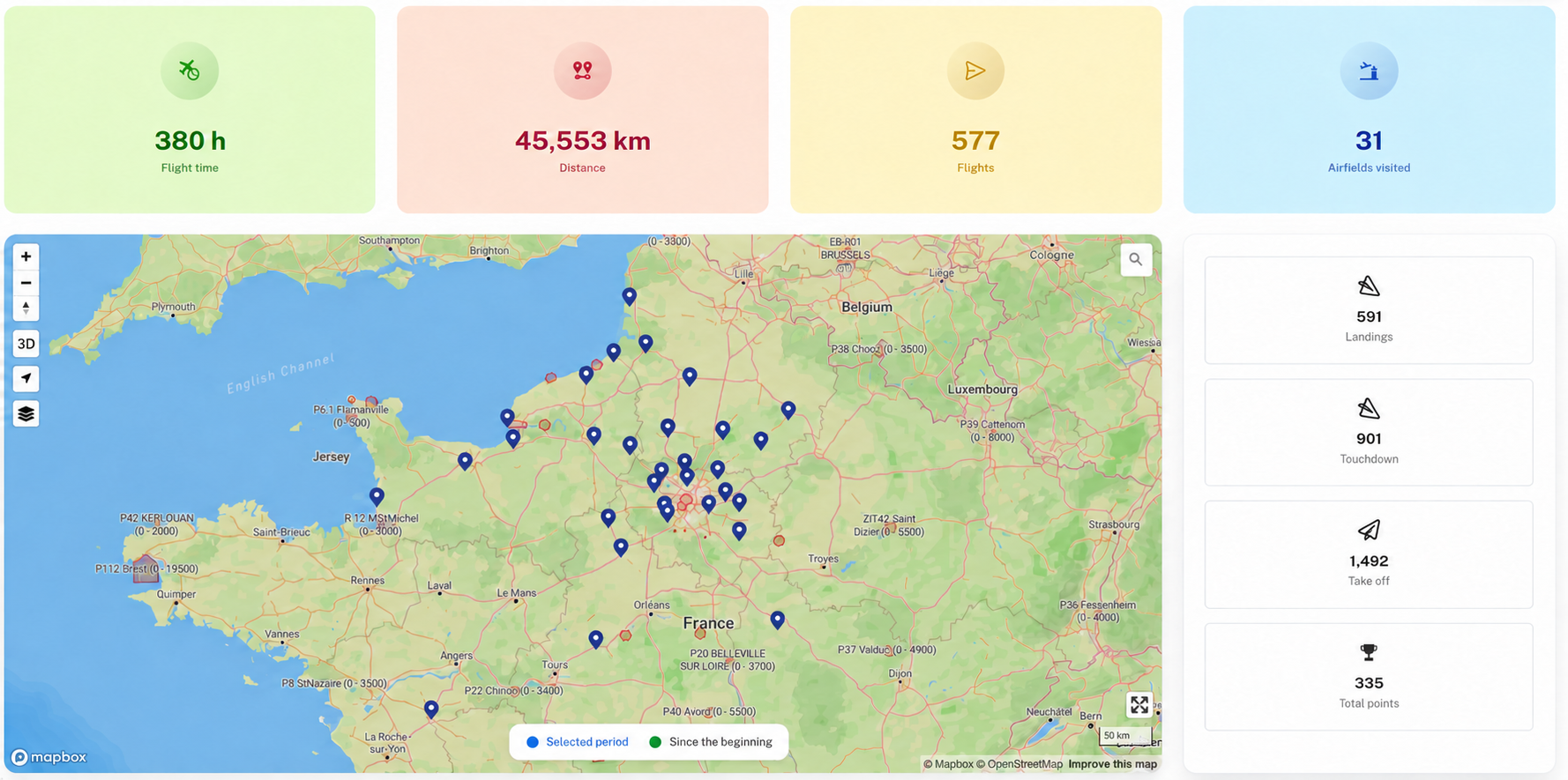
Keep a complete view of your activity and access the indicators that help you understand your flights and progress.
Flight hours, distance travelled, visited airfields, flight map, landings, take-offs and points are brought together in one view.
Find all your flights with their date, aircraft, departure and arrival airfields, together with the associated engine and movement times.
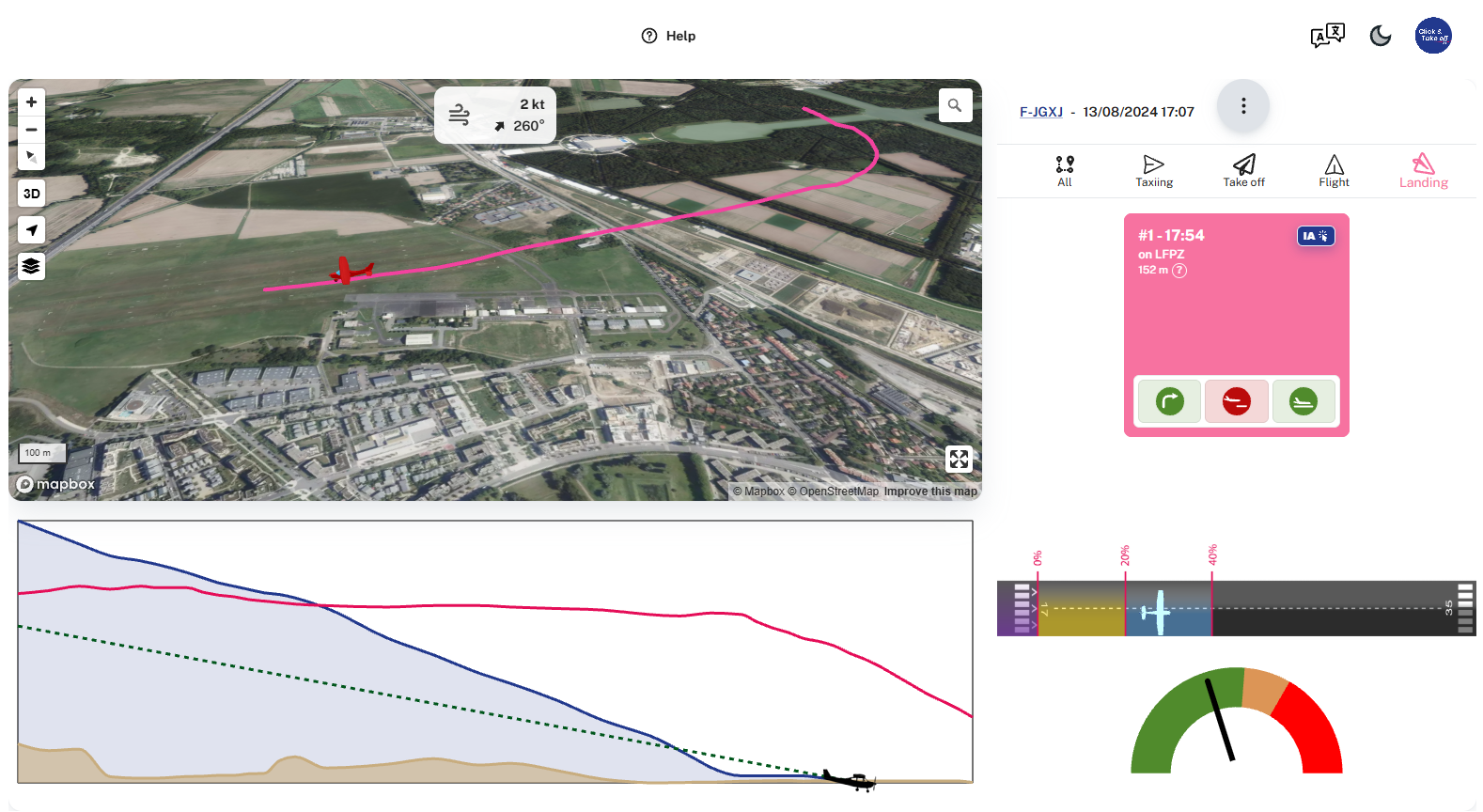
Analyse the entire flight, from taxi to landing. For each approach, compare the trajectory with the theoretical 5% descent path shown as a dotted line, then review touchdown precision and landing smoothness.
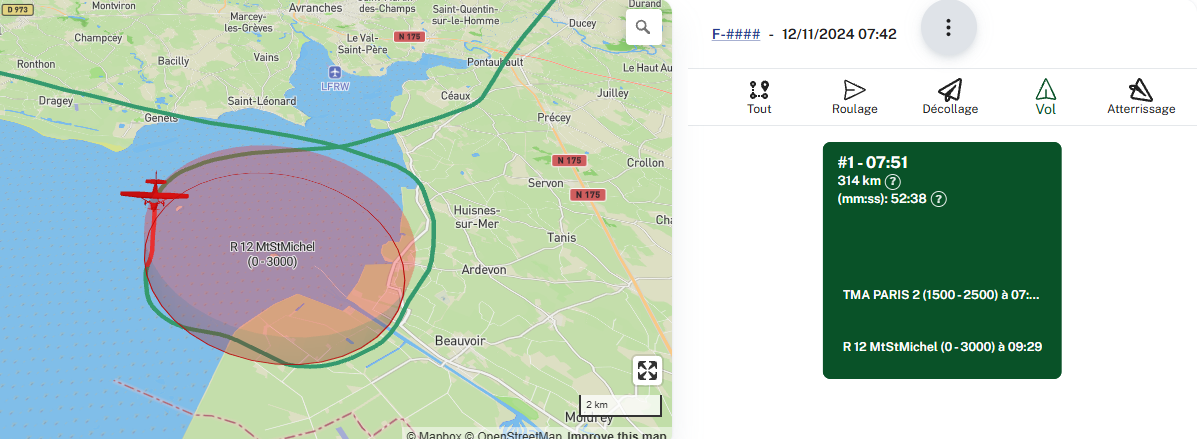
See the exact flight path and entry point into a restricted zone. In this Mont-Saint-Michel example, the analysis overlays the flight track with the boundary of restricted area R 12, making it immediately clear where and when the aircraft entered it.
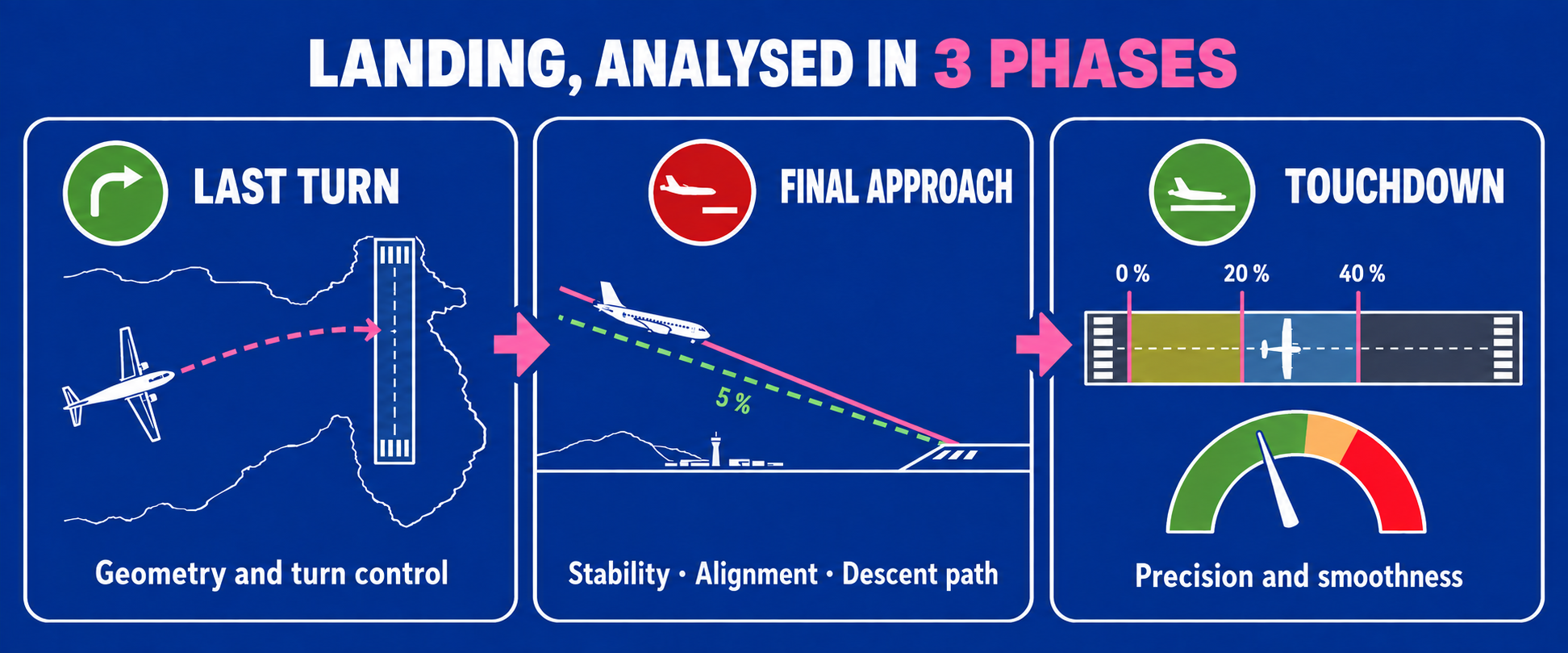
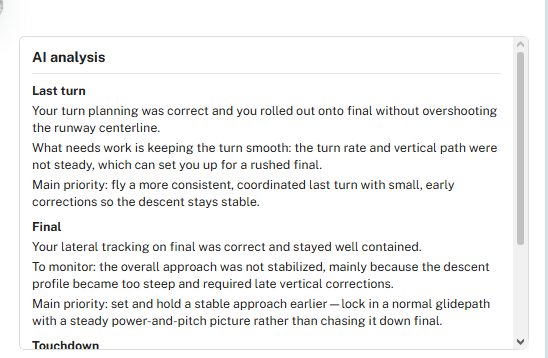
Each landing is broken down into three complementary analyses: the last turn, final approach and touchdown. This shows how the approach was constructed, how stable it was, and finally the precision and smoothness of the runway contact.
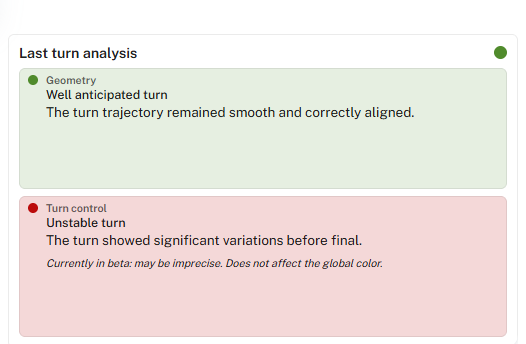
The last turn is reviewed from two perspectives: geometry, to check that the trajectory is smooth, well anticipated and correctly aligned with the runway; and turn control, to identify variations in trajectory and turn rate before final approach. This second assessment remains indicative because it is still in beta and may lack precision.
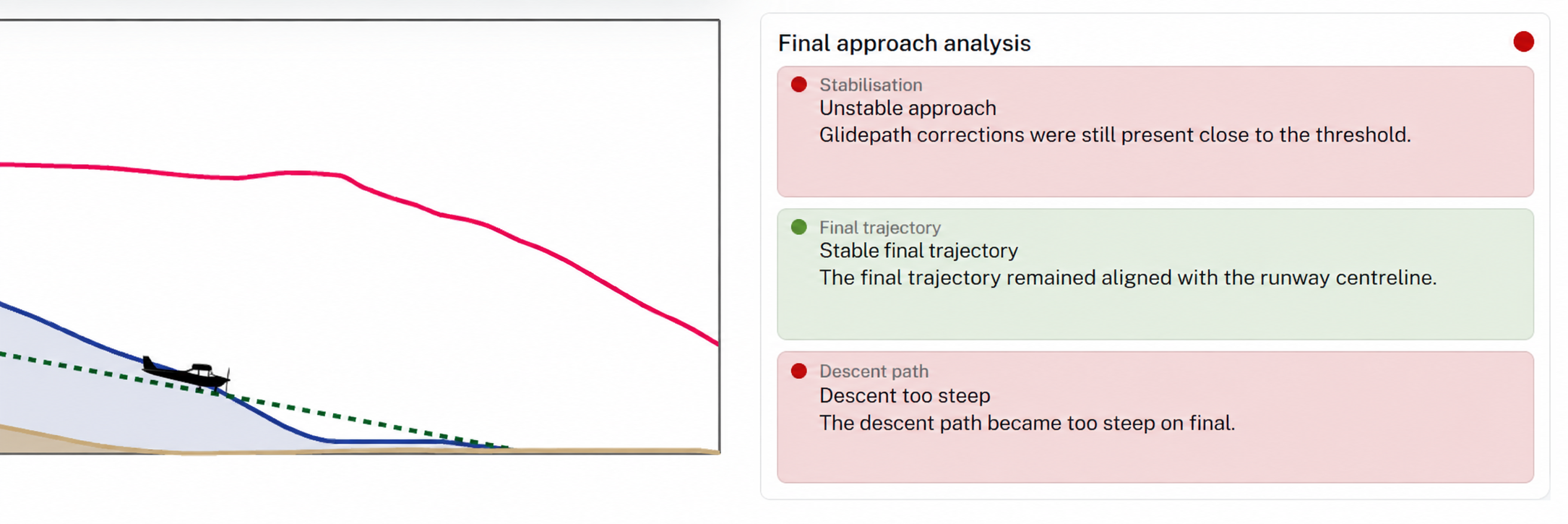
The final-approach analysis reviews stability, runway-centreline alignment and descent-path consistency. In the example shown, alignment is correct, but the approach is not stabilised: the descent becomes abruptly steeper near the threshold.
AI summarises the last turn, final approach and touchdown results, prioritises the points to monitor and suggests clear areas for improvement.
For the selected period, compare your first X landings with your last X landings to measure your progress. Track changes in touchdown precision and smoothness separately, with smoothness assessed from the G-forces measured at landing.
Flying club, operator, owner or workshop: let’s discuss your fleet and organisation.